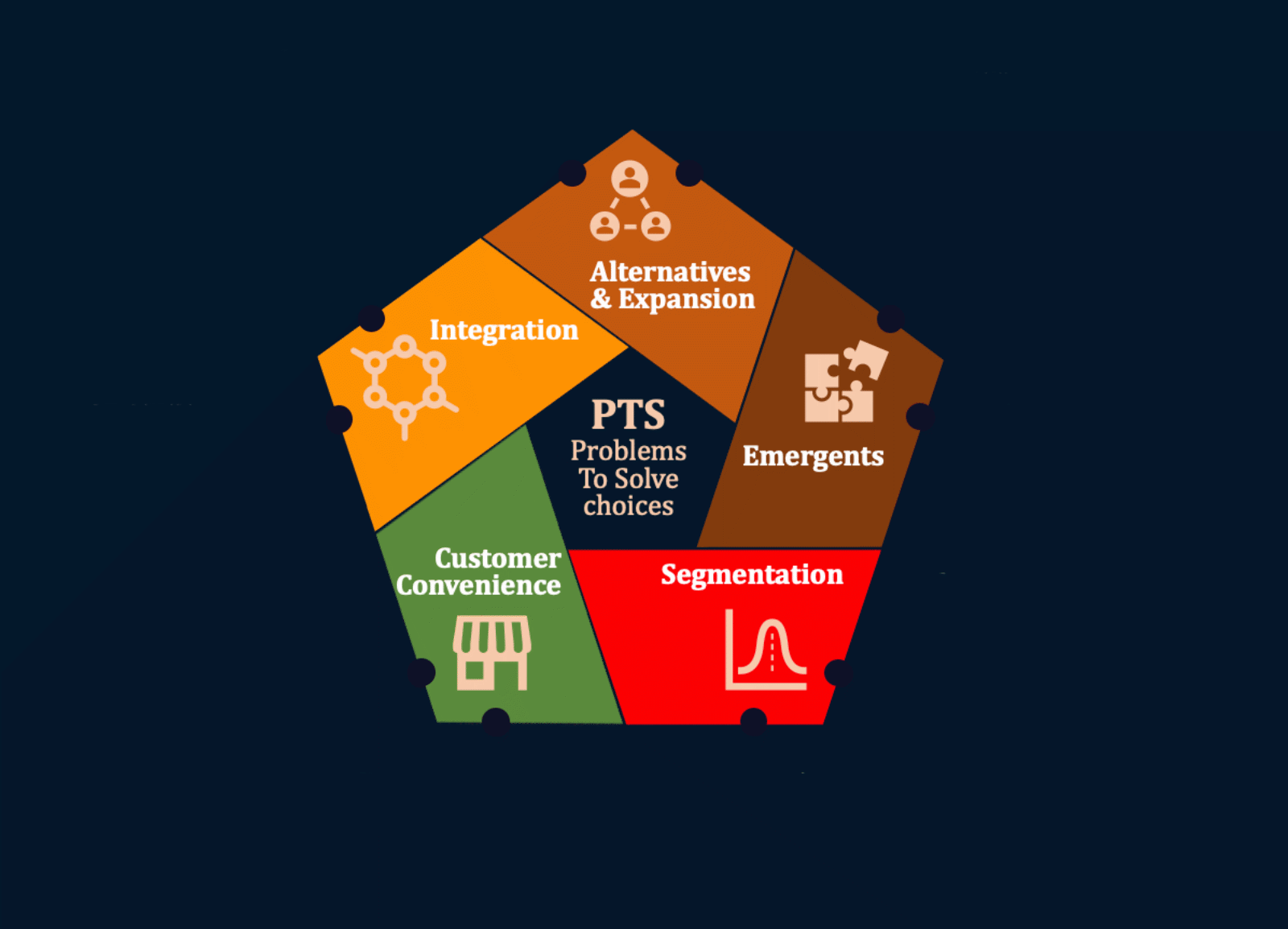
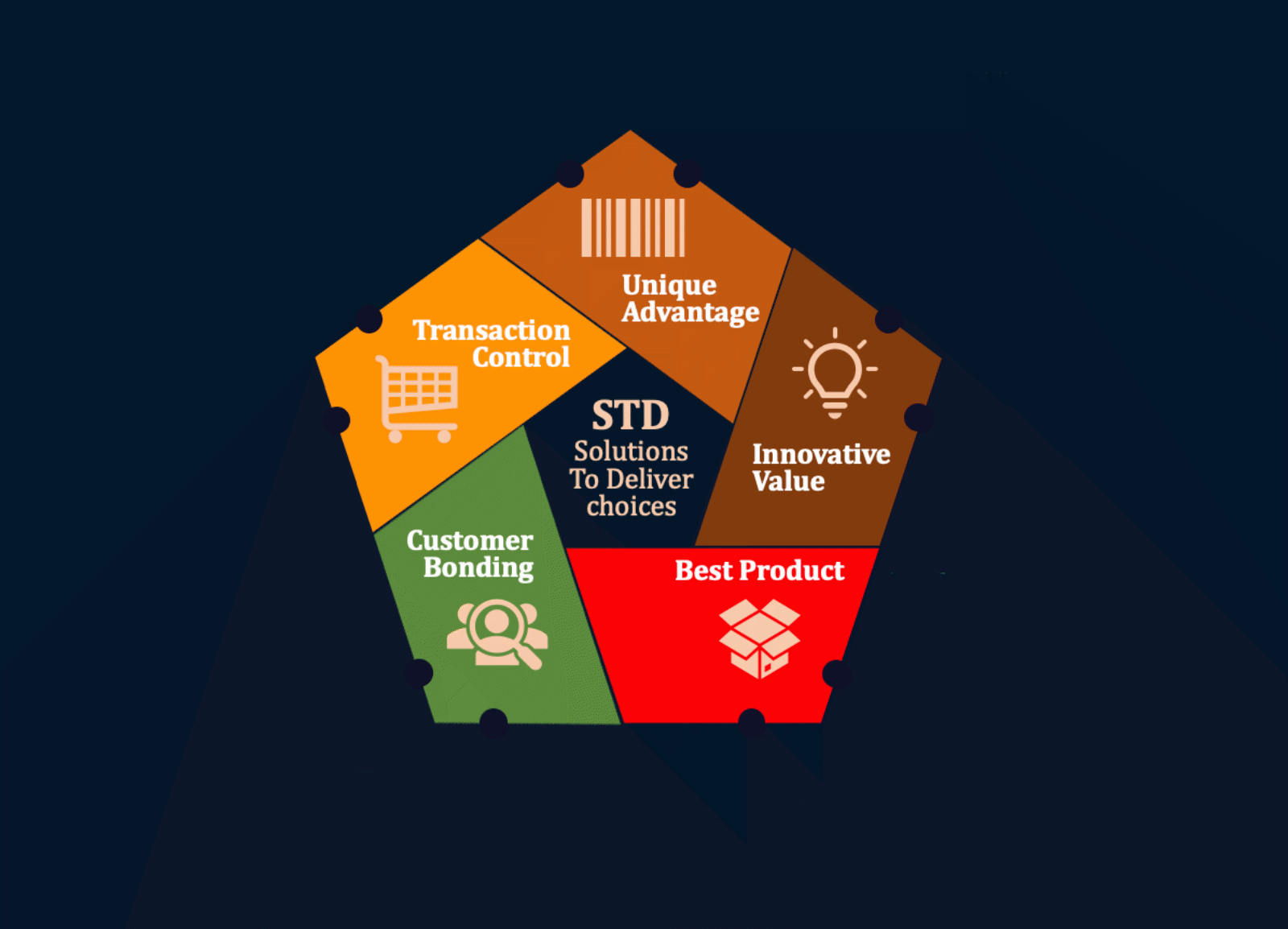
(F) Best Product
F1 Cost Leadership
Compete with the lowest cost in the industry, by reducing internal costs through operational excellence or outsourcing and external costs through a flexible ecosystem of suppliers and partners. One of Porter's generic strategies.
Reach lowest internal costs through operational excellence
Gain an unrivaled cost advantage based on operational excellence, automation, and continuous improvement.
Examples: Costco Wholesale, Zara (Inditex), Amazon Kiva Systems, Schreiber Foods, ALDI, DigitalOcean
Get lowest external costs with a suppliers ecosystem
Gain an unrivaled cost advantage based on lowest external cost and flexible supplier ecosystem.
Examples: Vizio ODM, PUMA, Wizz Air (Wet Lease), Wayfair Home Goods, Viatris, Renault Dacia
F2 Differentiation
Compete by being better rather than cheaper. Differentiate through quality, durability and brand equity, or through leadership in features and functionality. Another of Porter's generic strategies.
Focus on high-quality, durability, or brand equity
Build a significant advantage based on differentiating product attributes and brand equity leveraging.
Examples: Bang & Olufsen, Montblanc, Wüsthof, Patagonia, Emirates, Harley-Davidson, Ray-Ban
Focus on leadership in functionality innovation
Build a significant advantage based on differentiating through product features & functionality innovation.
Examples: ASML, Cloudflare, Dyson, NVIDIA, Oxford Nanopore Technologies, DJI, Milwaukee Tool
(G) Customer Bonding
G1 Customer Intimacy
Bond customers through the relationship. Exceed expectations along the full customer experience, or customize products and experiences up to a market of one.
Exceed expectations along the full customer experience
Gain a significant advantage by providing a differentiating customer experience exceeding expectations.
Examples: Ritz-Carlton, Zappos, Mayo Clinic, Lexus, Sephora Beauty Insider, Apple Genius Bar
Reach market-of-one with advanced customization
Gain a significant advantage by providing advanced product and experience customization, up to a market-of-one.
Examples: Porsche Sonderwunsch, Prose Hair Care, Flexport Shipping, Persona Daily Nutrition, Tylko Furniture
G2 Added Value
Add value around the core product. Build a one-stop-shop mix for horizontal integration, or add services and complementary information that enhance usage and extend the product's lifetime value for the customer.
Develop a one-stop-shop mix for horizontal integration
Build a significant advantage through one-stop-shop horizontal breadth coverage.
Examples: Whirlpool, Home Depot, IKEA, Amazon Prime, Disney, Target, Grab Super-App
Services add-on or channel disintermediation
Upselling auxiliary services or complementary information to enhance usage or extend product lifetime value.
Examples: Rolls-Royce Jet Engine TotalCare, Tesla Premium Connectivity, Apple, Philips Healthcare Cloud
(H) Transaction Control
H1 Exclusive Channel
Control access to the customer. Build entry barriers that block competitors from the channel, or obtain exclusivity through licensing or legal privileges that limit customers' choices.
Set channel entry barriers for blocking competitors
Develop a unique advantage by raising competitive barriers and limiting customer choices.
Examples: VMware Enterprise Lock-In, Pfizer, Bang & Olufsen, Titleist Pro Shop, Nespresso, Cubic ticketing
Gain exclusivity through lobbying for unique privileges
Obtain channel exclusivity through limited resources licensing or legal lobbying, blocking all or most competitors.
Examples: Vodafone, AT&T, Big Tech H-1B Visa Allocation, Intuit IRS TurboTax, Lockheed Martin, Palantir
H2 Dominant Exchange
Become the place where buyers and sellers meet. Build a multi-sided platform with critical mass, or act as a broker, curator or intermediary between buyers and the original providers.
Build a multi-sided platform and gain critical mass
Build and operate a dominant dual-sided business platform with a critical-mass of transactions between buyers and sellers.
Examples: Visa & Mastercard, Etsy Artisanal Marketplace, Upwork, Airbnb, Uber, Amazon Marketplace, eBay
Provide brokerage or seller-buyer intermediation
Build and operate a multi-sided business platform for brokering, curating, or disintermediating the relationship with original providers.
Examples: Booking.com, Spotify Music Streaming, DoorDash Restaurant Pipeline, RockAuto Auto Parts
(I) Unique Advantage
I1 Proprietary Ecosystem
Build a business ecosystem around your product. Turn a successful product into a de-facto standard for third-party providers, or orchestrate a network of complementors who add value to your product.
Turn a successful product into a de-facto standard
Turn a successful product into a de-facto standard for third party added-value providers.
Examples: Bosch CAN, Adobe PDF & PostScript, Nespresso, Intel, Qualcomm CDMA
Orchestrate a network of added value complementors
Build a network of complementors that add value to a core product and gain access to its customers in exchange.
Examples: Apple App Store, Google Play, Tesla Supercharger Network, GoPro Accessories Ecosystem
I2 Unique Enablers
Build new advantage on something that you already have or do that is unique: your capabilities (Capabilities-Driven Strategy) or your valuable, rare, inimitable and non-substitutable (VRIN) resources (Resource-Based View of the firm).
Build upon the existing capabilities and/or reputation
Build a new competitive advantage upon existing differentiating capabilities (Capabilities-Driven Strategy).
Examples: Uber Eats, Airbnb Experiences, Amazon AWS, Honda, Danaher Business System, PepsiCo DSD
Reuse VRIN resources to extend competitive advantage
Build a new competitive advantage upon existing VRIN resources (Resource-Based View of the Firm).
Examples: Nintendo & Disney characters, Fujifilm Collagen ASTALIFT, Eli Lilly Chronic Weight Management, UPS Cold-Chain Logistics
(J) Innovative Value
J1 Disruptive Innovation
Innovate through new technology. Act as an early mover or fast follower in an emerging market, or provide simpler to use, more ubiquitous and affordable alternatives to existing products, as described by Clayton Christensen's Disruptive Innovation theory.
Act as a new technology early mover or fast follower
Invest into emerging markets for gaining an Early-Mover or Fast-Follower competitive advantage.
Examples: Xerox Plain-Paper Copier, Apple iPhone, Sony Digital Camera, Tesla EV, OpenAI Generative AI
Develop simpler solutions, affordable, and ubiquitous
Use technology to provide simpler, more ubiquitous or affordable alternatives to existing products (Disruptive Innovation).
Examples: Netflix, Wise, Canva, Coursera, Teladoc Health, Uber, Airbnb, Robinhood
J2 Concept Innovation
Innovate the solution concept itself. Imagine novel products, business models, or customer experiences, or recombine existing solutions attributes in new ways, with competitive factors that were not considered before. This is based on the Blue Ocean Strategy theory.
Imagine novel products and customer experiences
Build higher-value but lower-cost value propositions with competitive factors never considered before (Blue Ocean Strategy).
Examples: Peloton Home Gym, GoPro, Slack, Dollar Shave Club, Oura Health Ring
Recombine existing products attributes in new ways
Build a new, unique competitive advantage by combining in novel ways features of products or services in different domains (Blue Ocean Strategy).
Examples: Stitch Fix, Lego Serious Play, Carbon Robotics LaserWeeder, Zwift Watopia, Formlabs 3D Printing